The container5 min
Glass or tin, with the lid tight
A small glass jar or a tin. Both keep saffron when the light is shut out. A clear jar in the sun spends the smell. This desk does not name a best jar.
The container question is simpler than the shops make it. Glass and tin both keep saffron threads when the lid is tight and the jar lives in the dark. A clear jar in a closed cupboard is a good jar. You can see the threads, which helps on the day you wonder whether they still look like themselves. The same jar on a windowsill is a display. The display spends the smell. A tin blocks the light on its own, so a tin left on the counter is less exposed than clear glass left on the counter. Keep either one off the stove, and off the dishwasher.
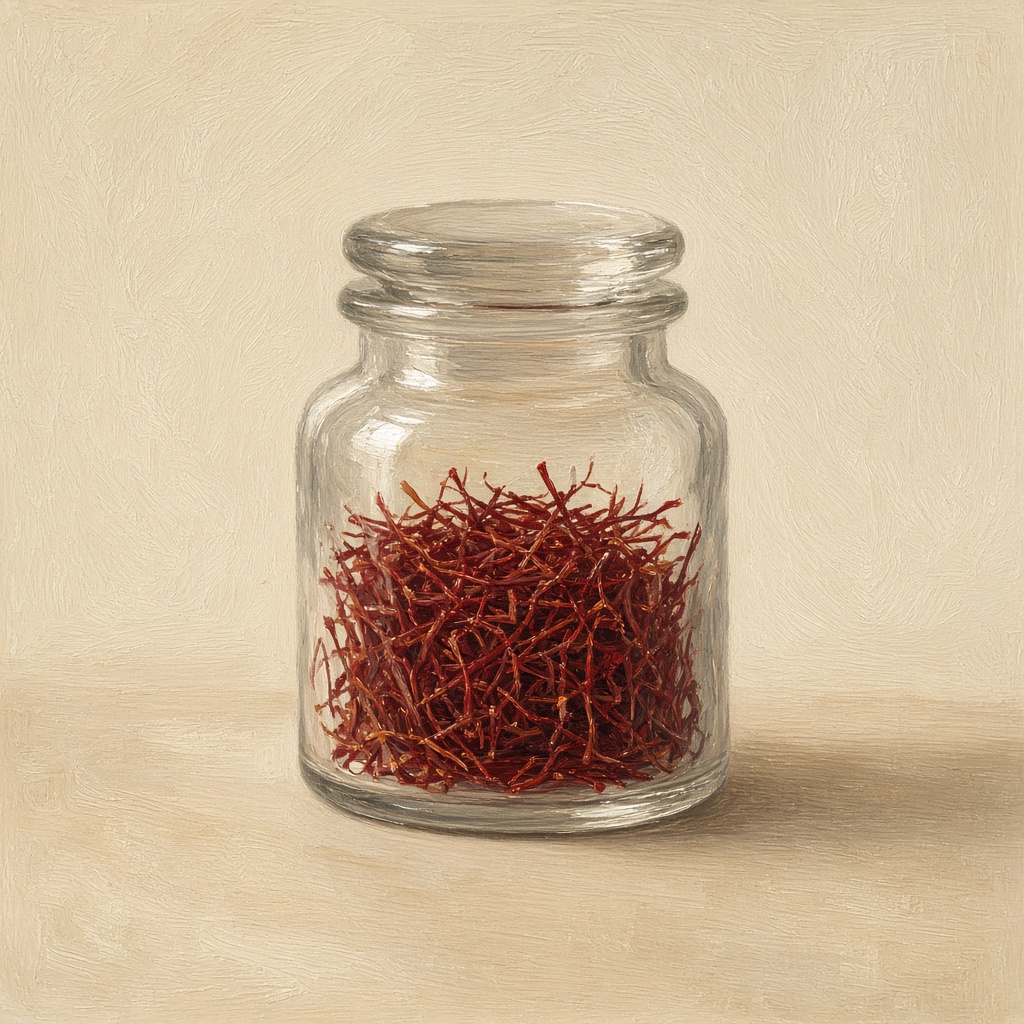
Glass, in the dark. A clear jar in a closed cupboard is a good jar. You can still see the threads.
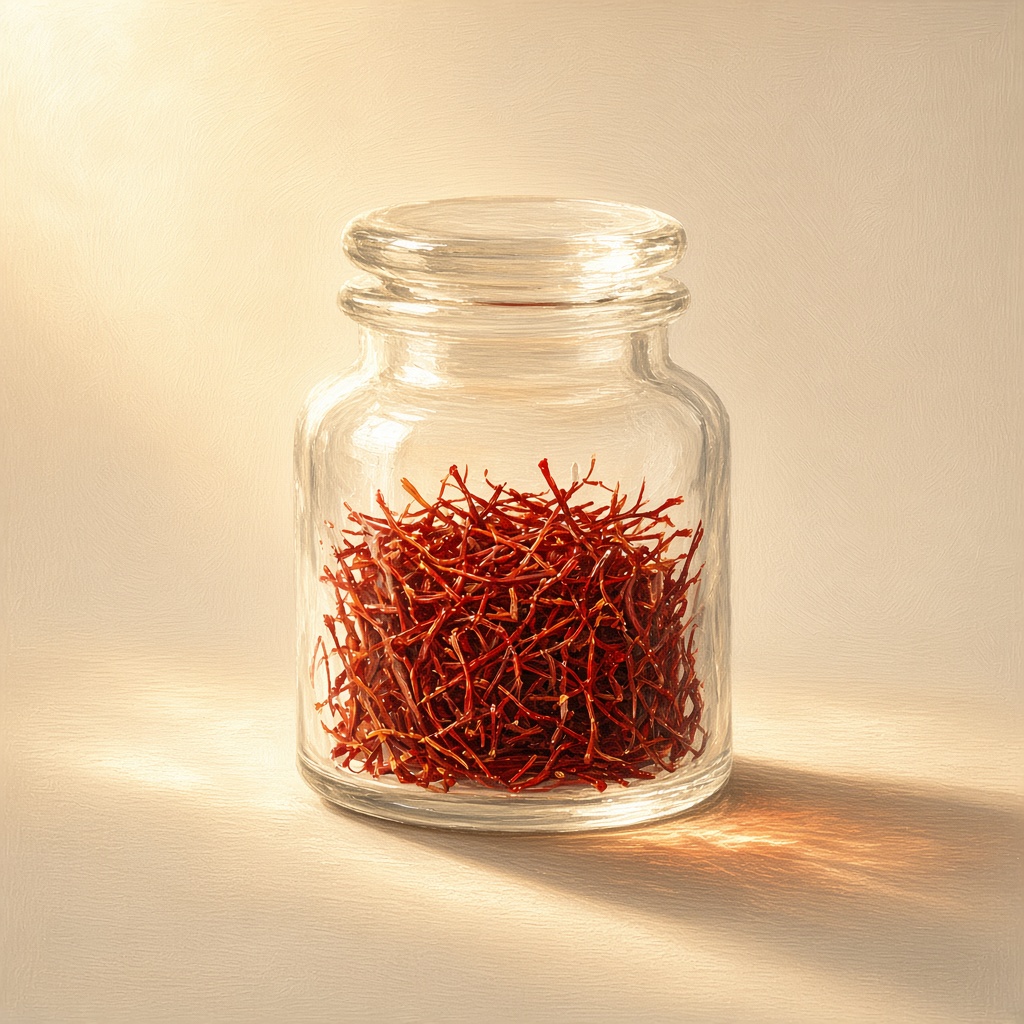
Glass, in the sun. The same jar, on show. Light spends the aroma while the threads still look red.
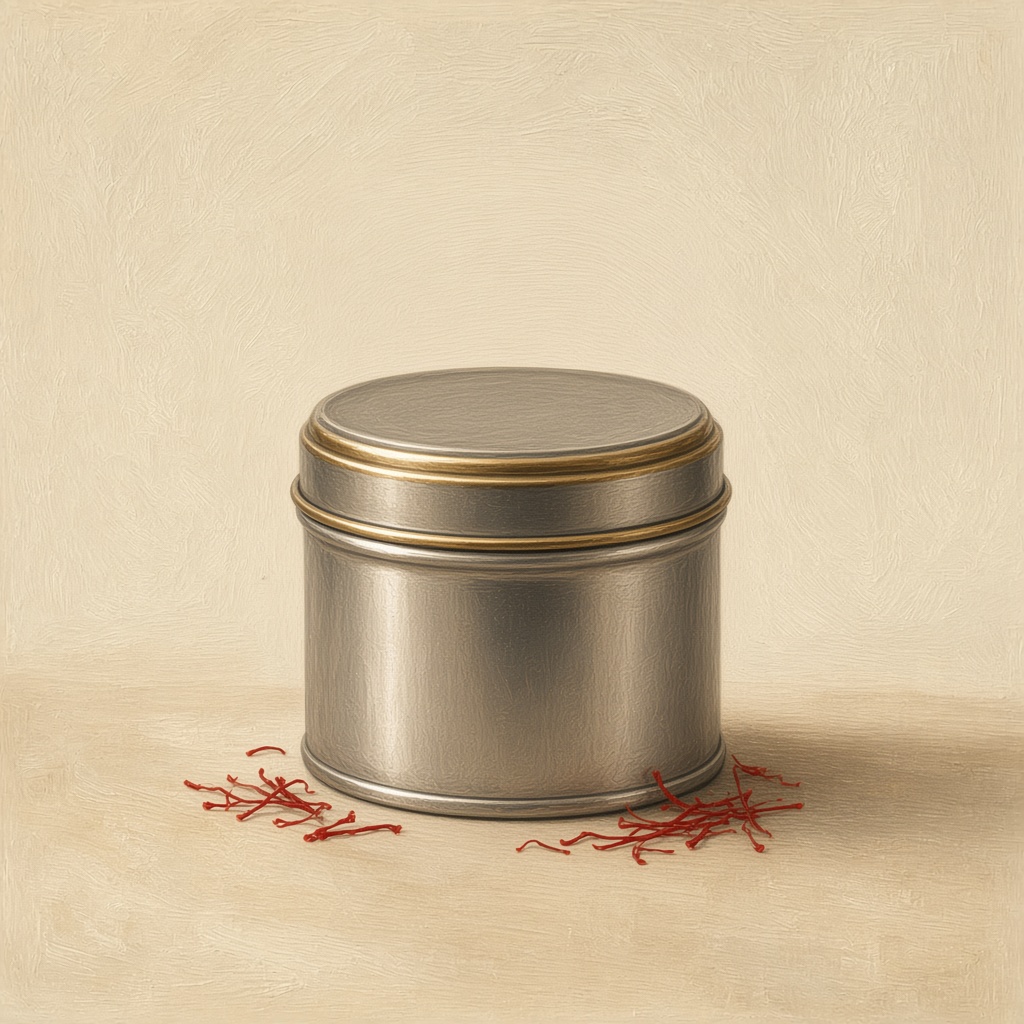
A tin. The metal keeps the light out on its own. The lid still has to be tight, and the tin still belongs off the stove.
Small, and closed
Small is the practical size. There is less empty air above the threads, and there is a jar you can finish while the smell is still there. A half-gram is that size: five pinches at 0.1 gram. The months are on how long saffron lasts. A large tin wins the rate per gram and then sits. A loose lid fails the glass and the tin equally. This desk does not name a best jar, and it does not rank the companies that sell them.
After you choose the container, the place still matters more than the material. The cupboard is on the first page. What a refrigerator and a freezer do to a tight lid is on the cold. The four things that spend a jar, light included, are on light, heat, moisture, and air.
The cooking habit, written from the stove's side, is on Saffron Cook. How the months fall out of a priced jar is on Saffron Cost. The evening version of the same cupboard is on Saffron Dreams.